If you have thin hair, you already know the frustration. Volume disappears by noon. Ends look wispy no matter how much you trim. Layers sometimes make it worse instead of better. And one wrong thinning shear moment can undo months of growth.
The truth is, thin hair doesn’t need “more styling.” It needs the right structure. The right cut can instantly create the appearance of density, movement, and fullness before you even pick up a blow dryer.
This guide breaks down the most effective haircuts for thin hair, explains why they work from a structural perspective, and helps you avoid the common mistakes that sabotage fullness. We’ll focus on three core principles:
- The power of the collarbone blunt cut
- How invisible layers add lift without sacrificing density
- Why over-thinning is the fastest way to lose volume
By the end, you’ll know exactly what to ask your stylist and what to avoid.
First: What Thin Hair Actually Needs
Before talking about specific cuts, it’s important to understand what thin hair lacks. Thin hair typically falls into one or more of these categories:
- Low strand density (fewer hairs per square inch on the scalp)
- Fine strand diameter (each individual hair is small in thickness)
- Low natural volume retention
The American Academy of Dermatology explains that hair thickness and density vary significantly from person to person and are largely genetic.
Source: https://www.aad.org/public/everyday-care/hair-scalp-care/hair/hair-loss
When hair is thin, weight distribution matters more than with thick hair. If too much length pulls downward, roots collapse. If too many layers remove bulk, ends become transparent. Thin hair thrives on balance.
The Collarbone Blunt Cut: The Most Reliable Density Booster
If there is one universally flattering cut for thin hair, it is the collarbone-length blunt cut.
Why It Works
A blunt perimeter creates a solid baseline. When the ends are cut straight across rather than feathered, the density remains concentrated at the bottom. At collarbone length, hair is long enough to feel versatile but short enough to prevent excessive downward drag.
When hair extends too far past the chest, gravity pulls it flat against the scalp. Shortening to collarbone redistributes weight upward.
What to Ask For
Tell your stylist:
- “I want a strong blunt perimeter.”
- “No thinning at the ends.”
- “Minimal internal texturizing.”
A true blunt cut means the ends feel thick when you hold them between your fingers.
Styling Impact
With this cut, even simple air-drying looks fuller. A basic blow-dry with a round brush produces lift without heavy teasing. Flat iron styling maintains a sleek look without revealing stringy ends.
Who It’s Best For
- Fine, straight hair
- Slightly wavy hair with low density
- Hair that loses volume when too long
If your hair feels thin at the ends, this is often the strongest structural reset.
Invisible Layers: Lift Without Sacrificing Thickness
Layers have a bad reputation among thin-haired clients — and often for good reason. Traditional layering removes bulk. However, invisible layers are different.
What Invisible Layers Are
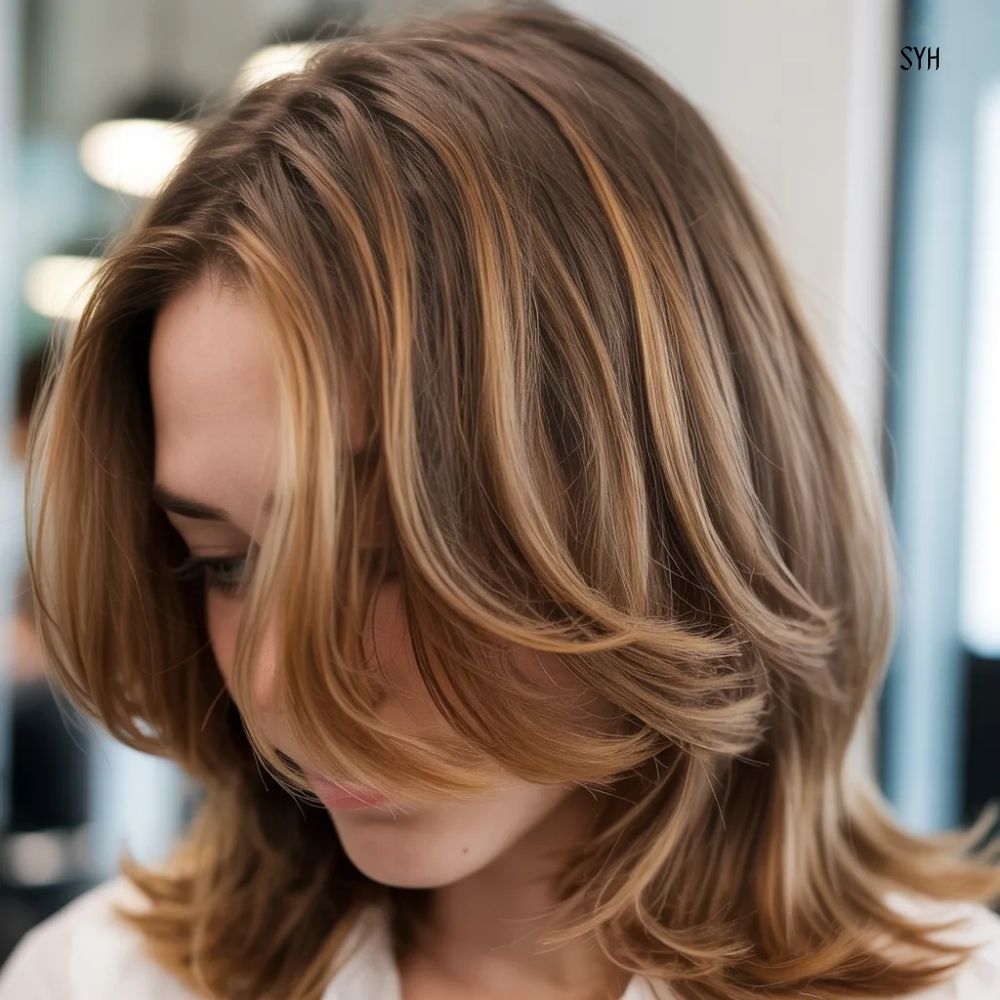
Invisible layers are subtle, internal cuts placed strategically within the top sections of the hair to create movement and lift while preserving the perimeter. The ends remain blunt. The internal structure creates volume without thinning the outline.
Why They Work for Thin Hair
Thin hair struggles at the crown. Invisible layers relieve slight weight at the top without hollowing out the bottom. Instead of dramatic tiered layers, you get:
- Soft movement
- Lift at the roots
- A fuller silhouette
The key difference is that the perimeter remains intact.
What to Avoid
Ask your stylist to avoid:
- Heavy razor cutting
- Deep point cutting at the ends
- Excessive texturizing shears
Those techniques may create movement in thick hair, but in thin hair they often cause transparency.
Styling Impact
With invisible layers:
- Blowouts hold shape longer
- Air-dried waves look more natural
- Hair doesn’t collapse flat at the crown
The cut works with volume products rather than fighting them.
Avoid Over-Thinning: The Fastest Way to Lose Density
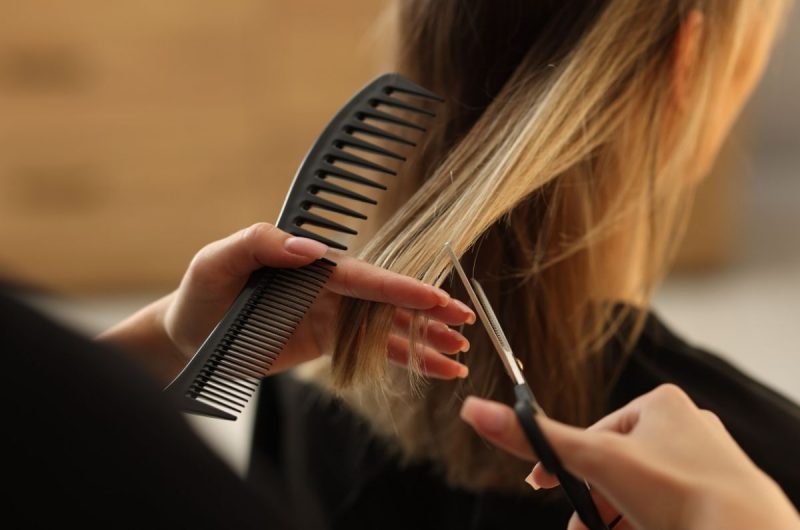
Thinning shears are not evil. But in thin hair, they are frequently overused.
What Over-Thinning Does
Thinning shears remove bulk by cutting alternating strands shorter. On thick hair, this reduces heaviness. On thin hair, it removes what little density you have. When thinning shears are applied near the ends, they create:
- Wispy appearance
- Frayed perimeter
- Difficulty holding curl
- Increased breakage visibility
Once the density is gone, it cannot be restored until hair grows out.
When Thinning Is Appropriate
Minimal internal thinning may help if:
- Hair is unevenly dense in certain sections
- There is slight bulk imbalance
But thinning should never hollow out the lower third of thin hair.
What to Say to Your Stylist
If you’ve had bad experiences before, be clear: “I have thin hair and I don’t want thinning shears used on the ends.” Direct communication prevents structural damage to your density.
Additional Cuts That Work for Thin Hair
While collarbone blunt cuts and invisible layers are foundational, there are variations worth considering.
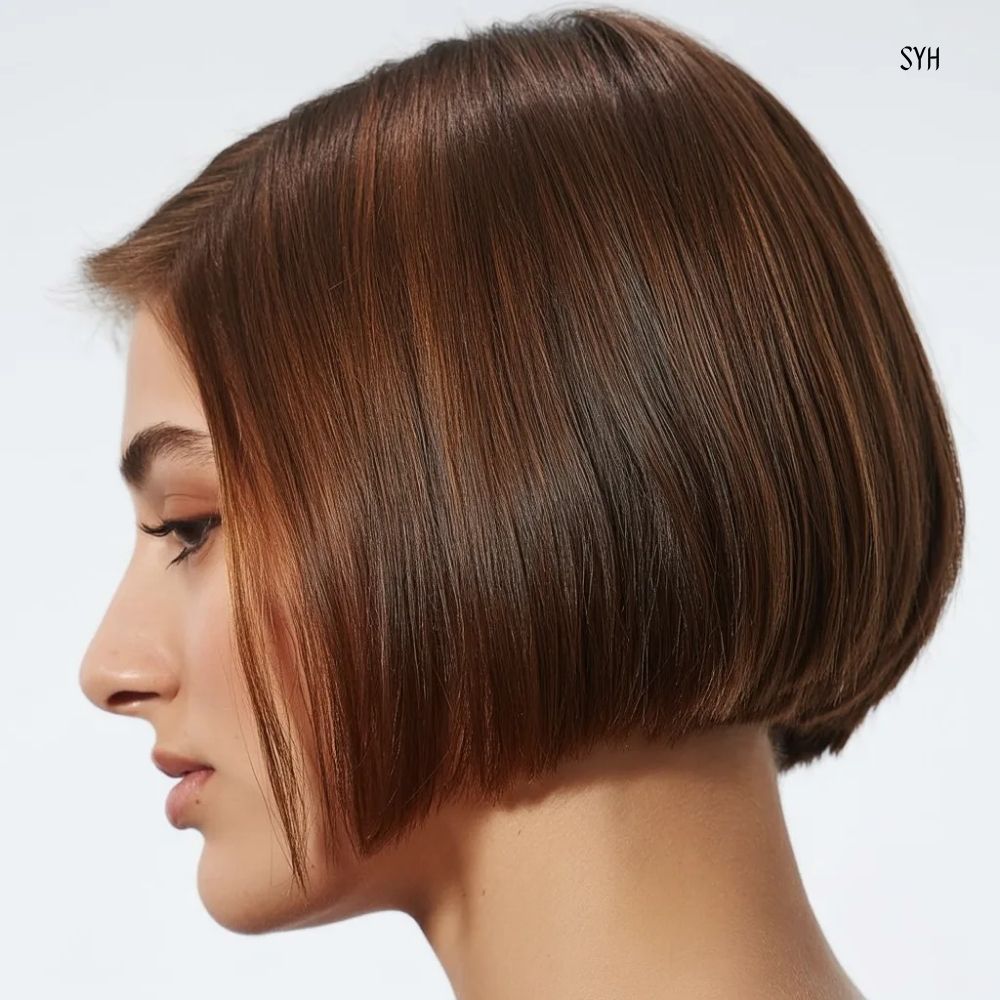
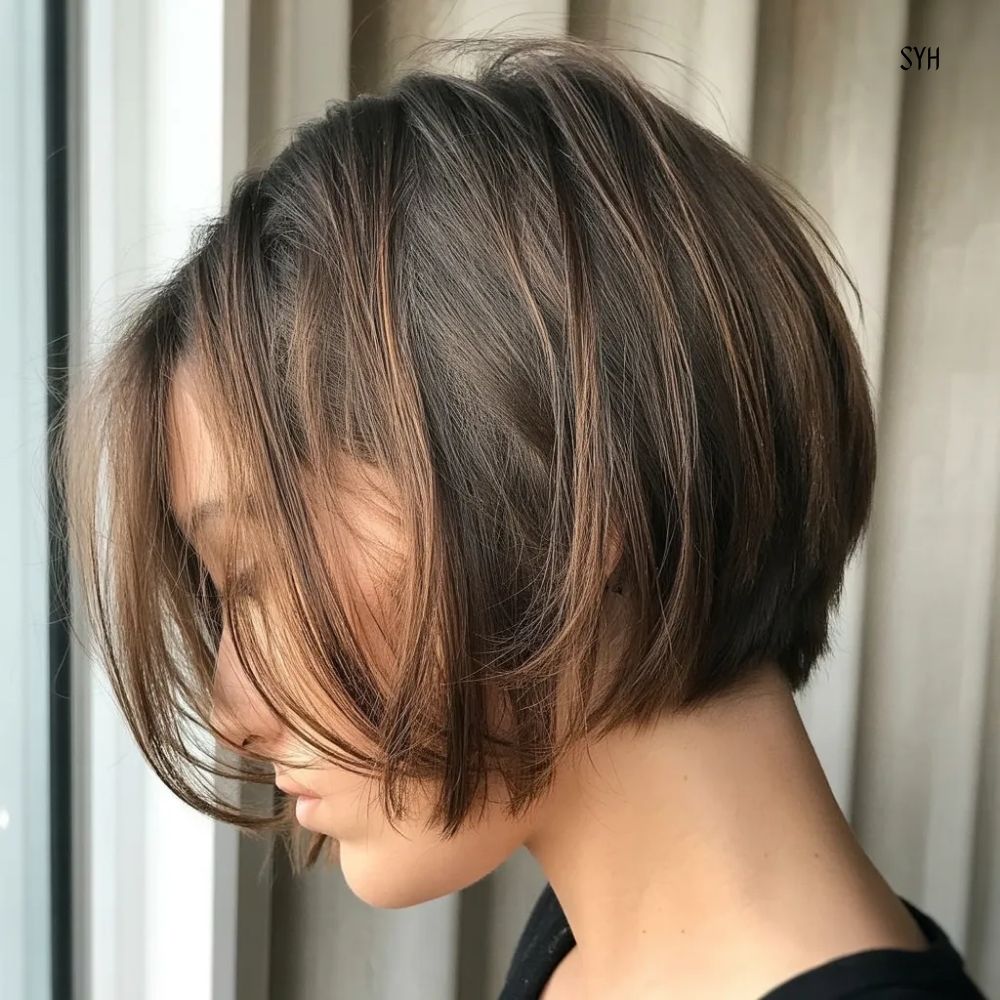
Soft Blunt Bob (Chin to Jaw Length)
A shorter blunt bob creates maximum density illusion because there is less length to distribute weight. This works especially well for:
- Very fine, straight hair
- Hair that won’t hold long styles
The shorter length enhances fullness automatically.
Long Blunt with Minimal Face Framing
If you prefer longer hair, maintain a blunt base but add minimal face-framing pieces. The framing should start below the chin to preserve density. Overly short face layers can make the front appear thin.
How Length Impacts Density
Length and density are directly connected. As hair grows longer:
- Ends become thinner due to breakage
- Weight increases
- Volume decreases
For thin hair, maintaining shoulder to collarbone length often creates the best balance between fullness and versatility. Ultra-long thin hair almost always appears flatter unless styled daily.
The Role of Porosity and Damage
Thin hair that is also damaged appears even less dense. Split ends and breakage amplify transparency. Regular trims (every 8–10 weeks) maintain blunt structure.
If hair is heavily processed, repairing internal strength may improve how full it looks. Minimizing heat damage and chemical stress helps reduce breakage and preserve overall hair integrity. Structural health supports visual density.
Styling Tips That Enhance the Right Cut
Even the best cut benefits from supportive styling.
- Use lightweight volumizing mousse at the roots
- Blow-dry upside down briefly for lift
- Avoid heavy oils near the scalp
- Finish with light texture spray instead of thick hairspray
The cut should do most of the work. Styling should enhance, not compensate.
What to Bring to Your Appointment
Bring:
- Clear photo references
- A note explaining your density concerns
- Specific instruction: “Preserve thickness at the ends”
Discuss your daily styling routine. If you rarely style, choose a cut that looks full without heavy manipulation.
The Bottom Line
Thin hair does not need complicated layers or dramatic reshaping. It needs:
- A strong, blunt foundation
- Subtle internal lift
- Minimal thinning
- Length that supports natural volume
The collarbone blunt cut remains the most reliable density booster. Invisible layers add movement without sacrificing thickness. Avoiding over-thinning protects the fullness you already have. When structure is right, hair automatically looks thicker with no extensions required.