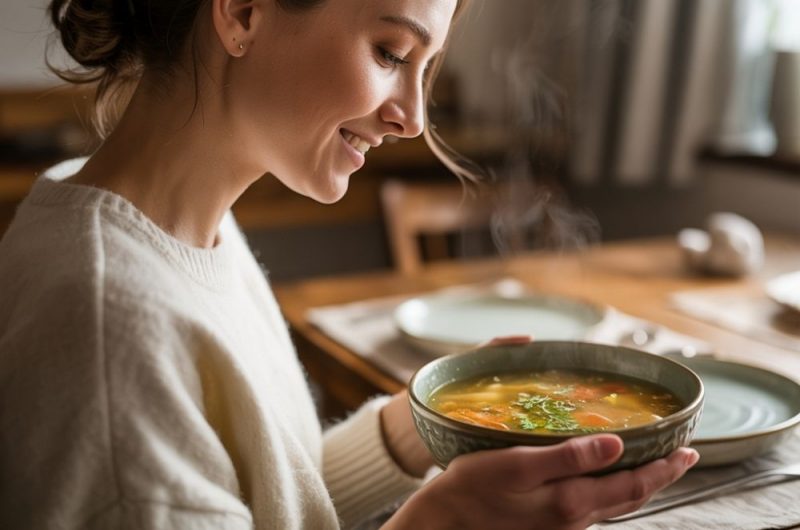
For a long time, I thought cooking needed to be improved. Faster. Smarter. More efficient.
Every small frustration felt like a problem waiting for a solution, and every solution came packaged as a hack, something clever meant to fix what felt inconvenient or slow. I tried many of them, some helpful, some forgettable, most of them leaving me slightly more tired than before.
What I didn’t realize at the time was that nothing was actually broken. My kitchen wasn’t failing me. I was simply trying to move through it in a way that didn’t match how my body and attention naturally work.
This isn’t a kitchen hack. It’s just how I cook now, quietly, intuitively, and with a kind of care that feels sustainable rather than impressive.
When Cooking Felt Like Something to Get Through
There was a period when cooking felt like a hurdle between me and the rest of my evening. I planned meals efficiently, chopped quickly, cleaned aggressively, and still felt slightly on edge by the time I sat down to eat.
I told myself this was normal. That cooking was supposed to be functional. That comfort came later, once everything was done. But over time, that separation began to feel artificial. I realized that the way I cooked shaped the way I ate, and the way I ate shaped how my evenings unfolded.
What I wanted wasn’t a better trick. I wanted a different relationship with the kitchen.
Letting Go of the Need to Optimize
The first thing I let go of was the idea that cooking needed constant optimization. I stopped asking how to make things faster and started asking how to make them feel smoother. That shift changed my attention completely.
Instead of rushing toward the finish line, I began noticing where friction showed up. Too many decisions. Too much heat. Too many interruptions. None of these required hacks. They required gentleness.
Once I allowed myself to slow down just enough to notice, cooking stopped feeling like a performance and started feeling like a rhythm.
How I Actually Cook Now
The way I cook now is simple, but intentional. Not structured, not strict, just responsive.
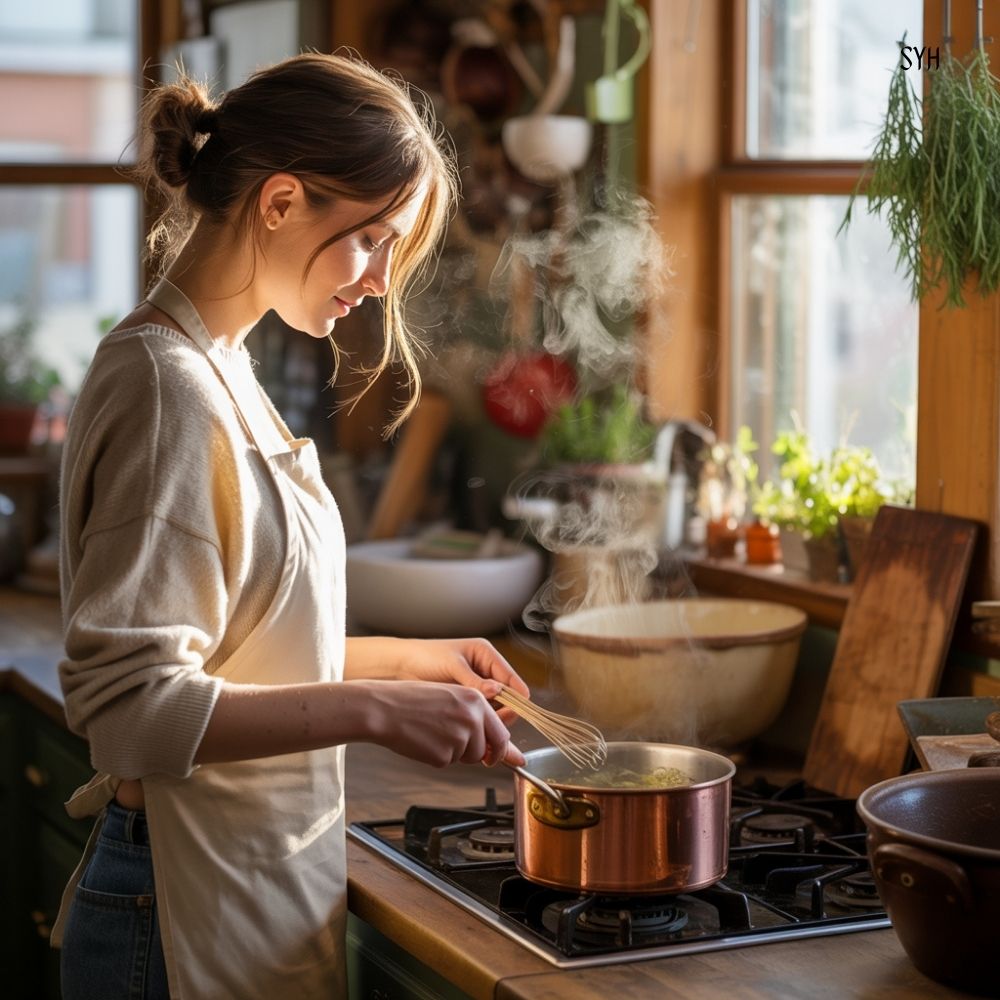
I begin by clearing one small space, not the entire kitchen, just the place where my hands will work. I take out the pan or pot I know I’ll need. I wash my hands slowly. That moment is less about preparation and more about arrival.
I choose meals I already understand on most days. Familiar soups. Simple vegetables. Pasta I’ve made so many times my hands know what to do before my mind catches up. This familiarity saves time, but more importantly, it saves energy.
I cook at lower heat than I used to. Food moves more calmly. I don’t hover. I don’t panic. I let things simmer, roast, or soften at their own pace while I stay nearby, present but not tense. This alone changed everything.
Why I Let One Thing Lead
I used to multitask constantly while cooking, trying to make every minute productive. Now, I let one thing lead. If something is simmering, that becomes the rhythm of the kitchen.
While it cooks, I rinse a few dishes. I wipe the counter. I stand and listen to the sound of steam rising. I don’t try to fill every second. I let the cooking set the pace.
This approach saves time without rushing because nothing feels interrupted. Everything flows into the next small movement naturally.
The Quiet Power of Pausing
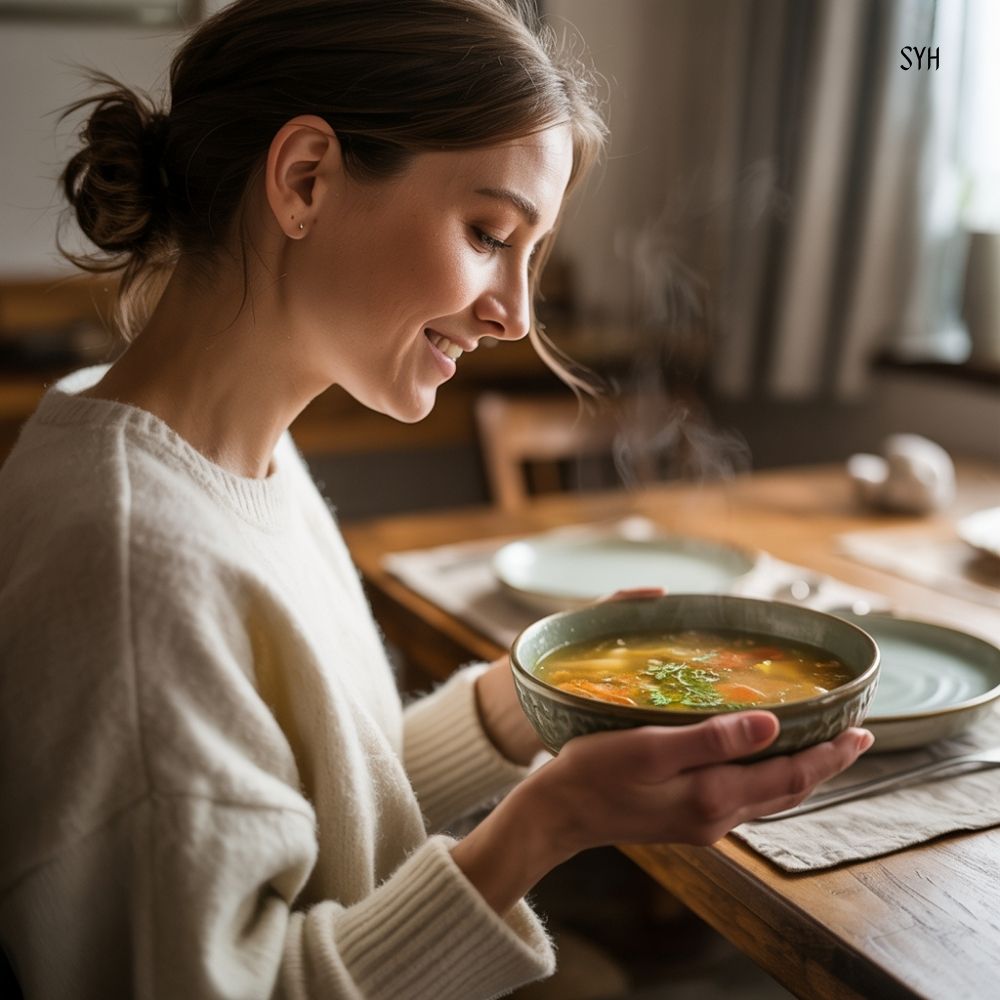
One of the biggest changes in how I cook now is that I pause on purpose. I pause to taste. I pause to adjust seasoning. I pause after turning off the heat.
Letting food rest for a few minutes before serving has become one of my most reliable comforts. Flavors settle. Textures soften. I wash my hands, set the table, and sit down already calm instead of carrying the momentum of cooking with me.
That pause does more than improve taste. It changes how the meal feels when it arrives.
Cleaning as a Companion, Not a Consequence
Cleaning no longer waits impatiently at the end. It moves alongside cooking in small, quiet ways.
I keep a towel nearby. I rinse tools as I finish with them. I stack dishes instead of scattering them. These aren’t rules. They’re habits that formed naturally once I stopped rushing.
By the time dinner is ready, the kitchen already feels calmer. There is no sharp transition from effort to rest. Everything winds down together.
A Few Elowen Kitchen Habits That Stick
I keep baking soda by the sink and use it for everything from hand resets to sink refreshes, because gentle solutions reduce irritation.
I choose one-pan meals often, not to be efficient, but to keep the kitchen quiet and contained.
I prepare extra grains or vegetables once or twice a week so weekday meals feel supported rather than rushed.
I let sound guide me. The gentle simmer of a pot tells me when to slow down more reliably than any timer ever did.
None of these are hacks. They are responses to how my body feels while cooking.
Why This Way Feels Kinder
What changed most wasn’t the food. It was me. My shoulders stay relaxed now. My breath stays even. I don’t brace myself against time or mess.
Cooking feels less like something I need to manage and more like something I can inhabit. That presence carries into eating, and from there into the rest of my evening.
I no longer feel the need to reward myself for cooking. Cooking itself has become part of care.
I allow uneven cuts. I allow a sink that isn’t spotless until morning. I allow meals to be simple without apologizing for them.
Perfection was never saving me time. It was costing me comfort. Letting go of it made everything move more smoothly.
When I stopped trying to cook “well” and started cooking honestly, my kitchen became a place I wanted to be.
Why This Isn’t a Hack
A hack implies a shortcut, something clever meant to bypass effort. What I’ve learned is that the most supportive changes don’t bypass anything. They soften it.
This way of cooking didn’t arrive all at once. It settled in through repetition, attention, and trust. It adapts as my life does. Some days are slower. Some days are simpler. The rhythm holds either way.
That’s why I don’t call this a hack. It’s not something I apply. It’s something I live.
Final Thoughts
This isn’t a kitchen hack. It’s just how I cook now, with care, rhythm, and attention that feels sustainable. By choosing smoothness over speed and presence over performance, I found that cooking stopped taking energy and started giving it back.
Sometimes, the most meaningful changes don’t look like improvements at all. They look like coming home to yourself, quietly, one ordinary meal at a time.