Blow-dry brushes are no longer just time-saving shortcuts; they have become long-term styling investments that directly affect the condition of your hair. The difference between a $60 heated brush and a $500 air-powered multi-styler is not branding alone.
It comes down to motor design, airflow engineering, temperature regulation, and how each tool interacts with the hair fiber over time.
If you are deciding between the Dyson Airwrap, the Shark FlexStyle, and the Revlon One-Step Volumizer, you are not simply choosing a blowout style. You are choosing how much heat your hair will endure repeatedly and how efficiently your tool will dry, smooth, and polish your strands.
Below is a detailed, side-by-side breakdown based on manufacturer specifications, published product information, and performance behavior. All technical claims are linked directly to official sources.
Power and Airflow: How Each Tool Actually Dries Hair
Power is not just wattage. It is motor speed, airflow precision, and how effectively the tool moves water off the hair while shaping it.
Dyson Airwrap
Dyson’s Airwrap is powered by the Dyson digital motor V9, which spins up to 110,000 revolutions per minute and produces high-pressure airflow rather than relying on extreme heat to style the hair.
Source: https://www.dyson.com/hair-care/hair-stylers/airwrap
Dyson’s technology uses what it calls the “Coanda effect,” a principle of fluid dynamics in which air attaches itself to a curved surface. In practical styling terms, this allows the hair to wrap around the barrel or brush attachment through air pressure rather than clamping force.
The Airwrap also measures air temperature over 40 times per second to prevent overheating.
Source: https://www.dyson.com/hair-care/hair-stylers/airwrap
What this means for real use is that Dyson prioritizes controlled airflow and lower heat styling. On fine to medium hair, it dries quickly without blasting extreme temperatures directly against the cuticle. On very thick hair, drying may take slightly longer than traditional high-heat tools, but the airflow remains consistent and controlled.
Shark FlexStyle
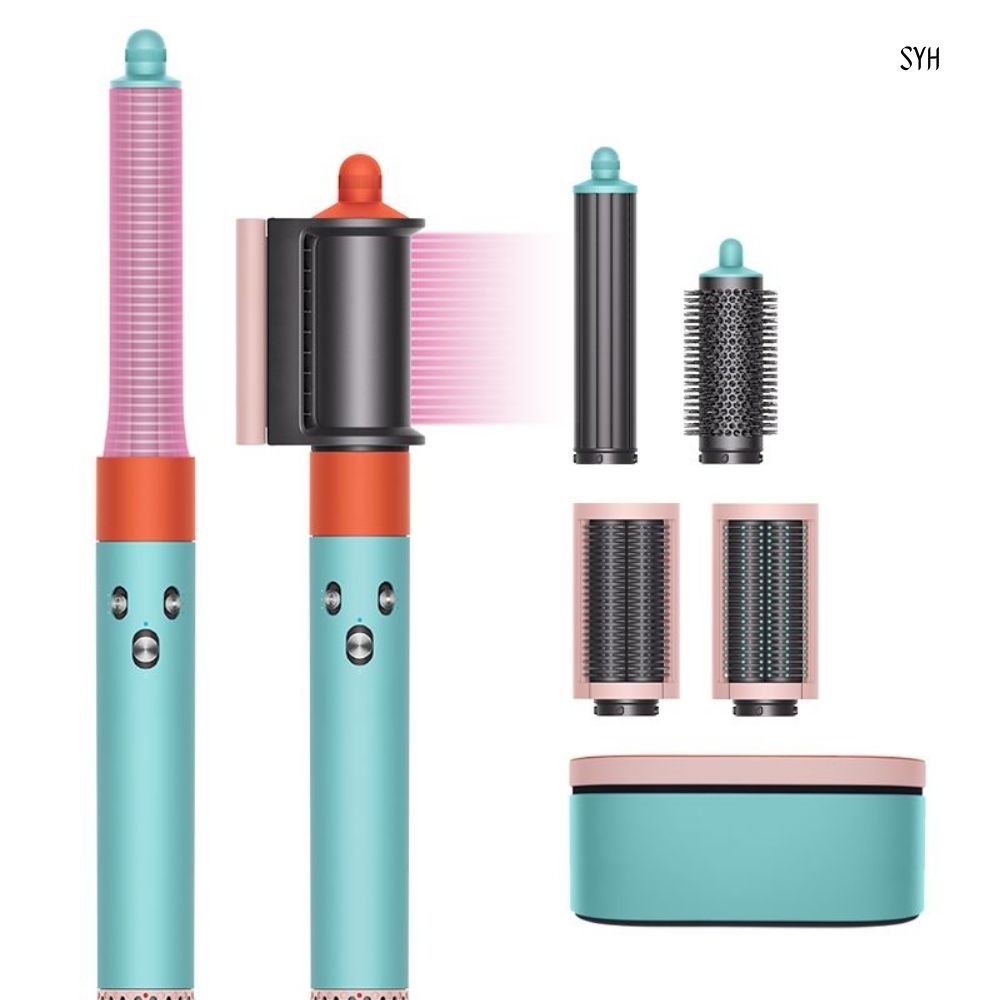
The Shark FlexStyle also uses a high-velocity digital motor and markets itself as an air-powered styling system that converts between a hair dryer and a styling tool.
Source: https://www.sharkclean.com/products/shark-flexstyle-air-styling-drying-system-zidHD430
While Shark does not publish motor rpm figures as prominently as Dyson, it emphasizes powerful airflow combined with multiple heat and speed settings.
In performance, it delivers strong drying capability that is competitive for medium to thick hair, although airflow precision feels slightly less refined compared to Dyson’s directional control.
The key difference is that Shark’s airflow technology is clearly modeled to compete with Dyson’s air-based styling concept, but at a lower price point. For most users with medium-density hair, Shark’s power is more than sufficient for a smooth blowout.
Revlon One-Step Volumizer
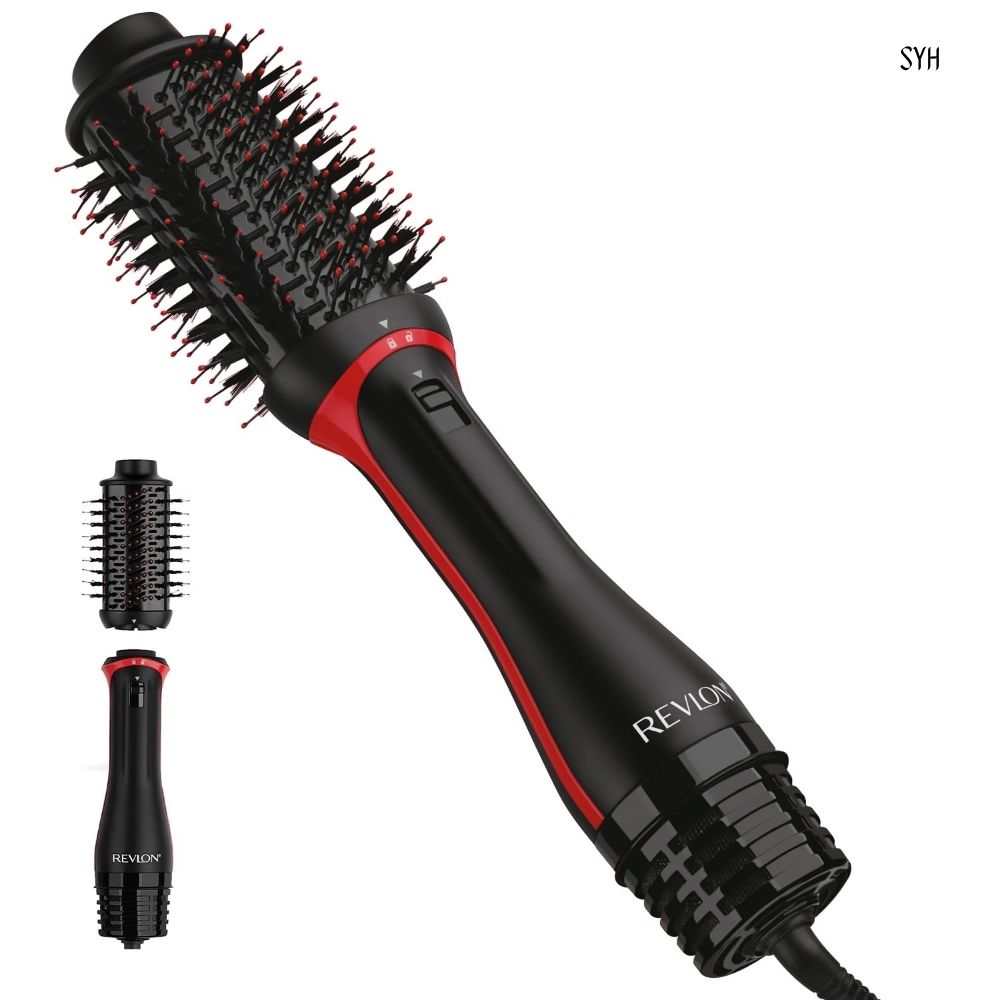
The Revlon One-Step Volumizer operates differently. It uses a traditional 1100-watt heating element combined with airflow in an oval brush format.
Source: https://www.revlonhairtools.com/one-step-volumizer-plus
Unlike Dyson and Shark, which rely heavily on airflow to style, the Revlon tool combines direct barrel heat contact with air. This results in faster smoothing for coarse hair because the heated surface makes physical contact with the strand while drying.
The trade-off is that more direct heat exposure can increase cumulative dryness when used frequently.
In terms of raw drying speed on thick hair, Revlon can actually feel faster because it uses higher contact heat. However, it does not offer the same advanced airflow engineering as the other two.
Weight and Ergonomics: What Happens After 20 Minutes of Styling
Tool weight becomes significant when styling long or thick hair.
Dyson Airwrap
Dyson weighs approximately 1.5 pounds depending on attachment configuration.
Source: https://www.dyson.com/hair-care/hair-stylers/airwrap
The weight distribution is balanced, and the handle is slim. The attachments click in smoothly, and the motor feels compact rather than bulky. During longer styling sessions, arm fatigue is minimal, especially compared to older hot brushes. The Airwrap feels engineered for frequent use.
Shark FlexStyle
The Shark FlexStyle also weighs around 1.5 pounds, though its convertible design makes the body slightly thicker than Dyson’s.
Source: https://www.sharkclean.com/products/shark-flexstyle-air-styling-drying-system-zidHD430
In practical use, it remains comfortable for most users, though the hinge mechanism adds mild bulk. For long hair that requires extended drying, the difference in ergonomics is noticeable but not dramatic.
Revlon One-Step
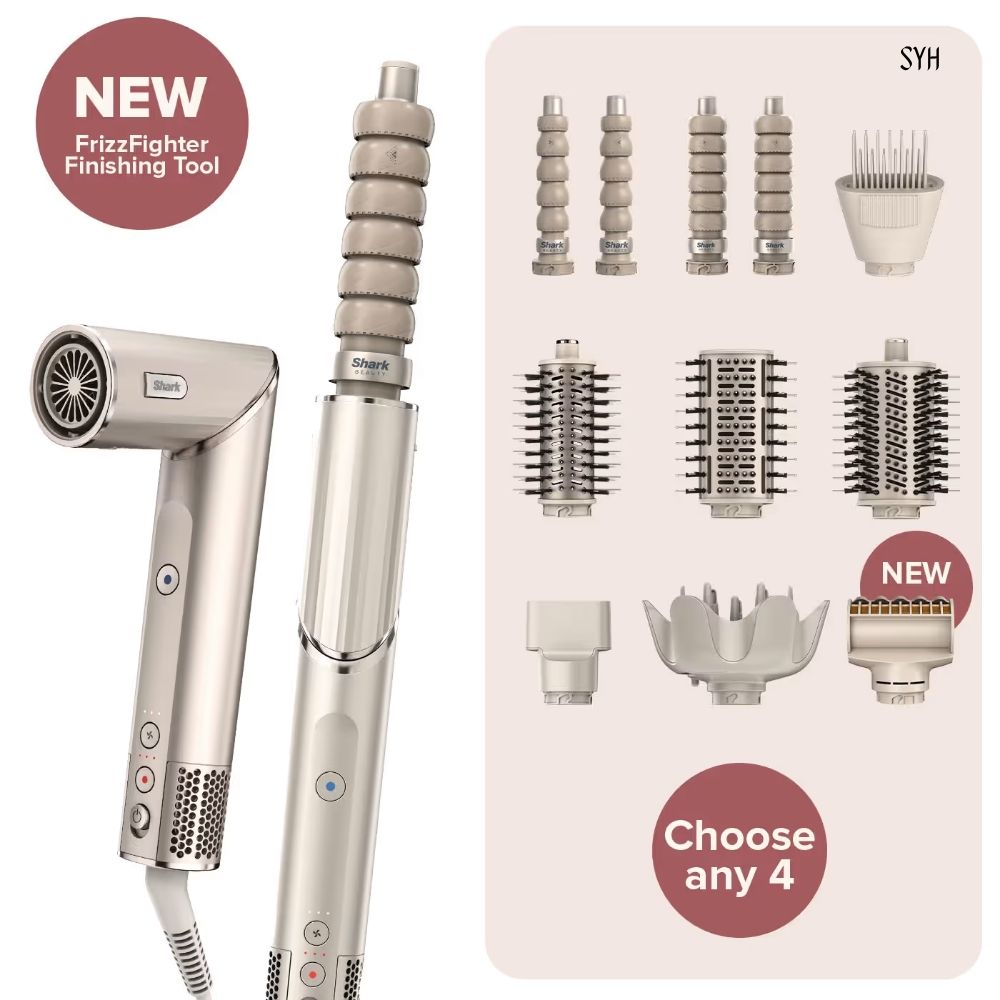
The Revlon One-Step weighs closer to 1.8 pounds and features a larger oval brush head.
Source: https://www.revlonhairtools.com/one-step-volumizer-plus
Because the heating element is built into the brush barrel itself, the head feels heavier during styling. Users with shorter hair or smaller hands may find the size slightly unwieldy. For occasional use, this may not matter. For daily styling, the extra weight becomes more noticeable.
Heat Exposure and Damage Potential
Hair damage accumulates gradually. Heat management is therefore critical.
Dyson’s Temperature Control
Dyson states that the Airwrap measures temperature over 40 times per second to prevent extreme heat damage.
Source: https://www.dyson.com/hair-care/hair-stylers/airwrap
Because the styling relies more on airflow than high heat, the overall heat exposure is generally lower compared to traditional hot brushes. Repeated daily use is less likely to cause protein degradation compared to direct-contact heated barrels.
Shark’s Heat Regulation
Shark markets its FlexStyle as offering multiple heat settings with controlled air styling.
Source: https://www.sharkclean.com/products/shark-flexstyle-air-styling-drying-system-zidHD430
While it does not publish the same level of temperature monitoring detail as Dyson, it avoids prolonged high-contact heat because it operates as an air styler rather than a heated clamp tool. Heat exposure remains moderate when used on appropriate settings.
Revlon’s Direct Heat Contact
Revlon’s heated barrel design means hair remains in direct contact with a heated surface while airflow passes through.
Source: https://www.revlonhairtools.com/one-step-volumizer-plus
This produces fast smoothing and volume but increases cumulative heat exposure, especially if used daily on high settings.
For thick, resilient hair, this may not cause immediate issues. For bleached or fragile hair, repeated direct heat contact can contribute to dryness over time.
Shine and Finish Quality
Shine results from smooth cuticle alignment and controlled styling. Dyson produces a lightweight, polished finish with reduced frizz because airflow smooths the cuticle without pressing it harshly. The result feels softer and more natural, particularly on fine to medium hair.
Shark produces comparable shine for most hair types, though in high humidity conditions, airflow control can feel slightly less refined than Dyson’s.
Revlon produces bold volume and a salon-style blowout quickly. However, because it relies more on heat contact, the finish can feel slightly heavier, especially if styling products are layered underneath.
Who Each Tool Is Actually Best For
The right choice depends on hair type and styling habits rather than price alone.
Dyson Airwrap is best suited for individuals who style frequently, prioritize long-term hair health, and have fine to medium-density hair that responds well to airflow shaping. It is also ideal for those who want curling and smoothing versatility in one system.
Shark FlexStyle is well suited for medium to thick hair and for users who want similar versatility to Dyson without the luxury pricing. It delivers strong performance for regular styling while keeping heat exposure relatively controlled.
Revlon One-Step remains one of the fastest tools for thick, coarse hair that needs aggressive smoothing. It is a practical choice for occasional use or for users who want dramatic volume without investing in high-end technology. However, it is less suitable for fragile or heavily bleached hair that requires reduced heat exposure.
Final Evaluation
If your priority is minimizing heat damage while maintaining strong styling performance, Dyson remains the most advanced system based on its airflow engineering and temperature control technology.
If you want a high-performing alternative that balances cost and versatility, Shark delivers impressive results with slightly less refinement but strong overall value.
If speed, volume, and affordability are your top priorities and your hair is resilient enough to tolerate direct heat, Revlon remains effective.
The decision ultimately comes down to how often you style, how fragile your hair is, and whether you are investing for short-term convenience or long-term hair integrity.