I learned how to keep going even when I felt tired, how to soften discomfort with productivity, and how to convince myself that rest could wait until everything else was finished. I did not think of this as something I chose. It felt like a quiet expectation, woven into the way I moved through my days.
What I did not realize was how often pushing through became my default response, even when nothing urgent was at stake. I pushed through mild discomfort, emotional heaviness, mental fog, and subtle resistance.
Over time, that habit began to leave me feeling slightly disconnected from myself, as if I were always arriving somewhere a moment too late.
The shift did not come from learning how to rest better or organize my time more efficiently. It came from asking myself one gentle question instead of pushing through. That question changed the tone of my days in a quiet but lasting way.
When Pushing Through Feels Automatic
Pushing through is rarely dramatic. It does not always look like burnout or exhaustion. More often, it looks like continuing when something feels slightly off, ignoring small signals because they seem inconvenient or unnecessary to address.
I pushed through moments of emotional tightness by staying busy. I pushed through mental fatigue by telling myself I just needed to focus harder. I pushed through physical discomfort by promising myself relief later. None of this felt harmful in isolation. It felt practical, even responsible.
What I did not notice at first was how rarely I asked myself whether pushing through was actually required. I treated resistance as something to overcome rather than something to understand.

The Moment I Paused
The moment that changed everything was unremarkable. I was in the middle of an ordinary afternoon, moving from one task to another, when I felt a familiar heaviness settle in. My instinct was to push through it, to finish what I was doing and deal with the feeling later.
Instead, I paused. Not for long, just enough to notice the resistance without trying to override it. That pause felt uncomfortable at first, like standing still in a current that expected movement.
In that quiet moment, I asked myself a question that felt surprisingly gentle and grounding.
The Question I Ask Myself Now
The question I ask myself instead of pushing through is simple, but it carries weight because of when I ask it.
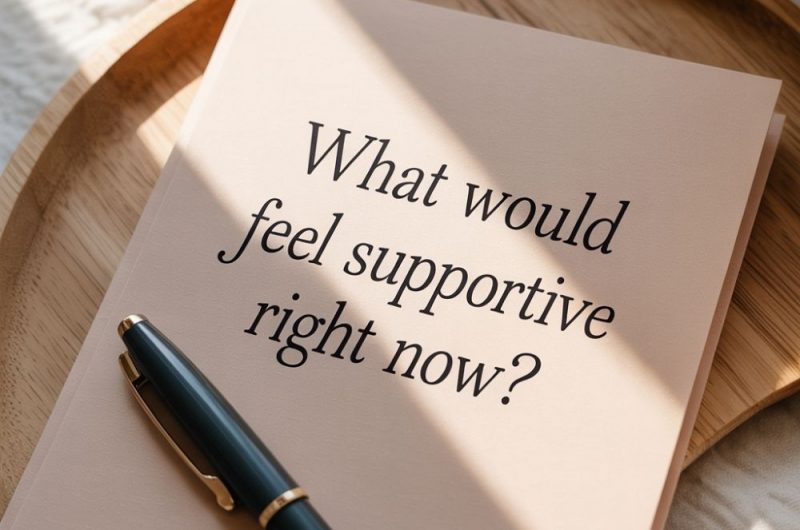
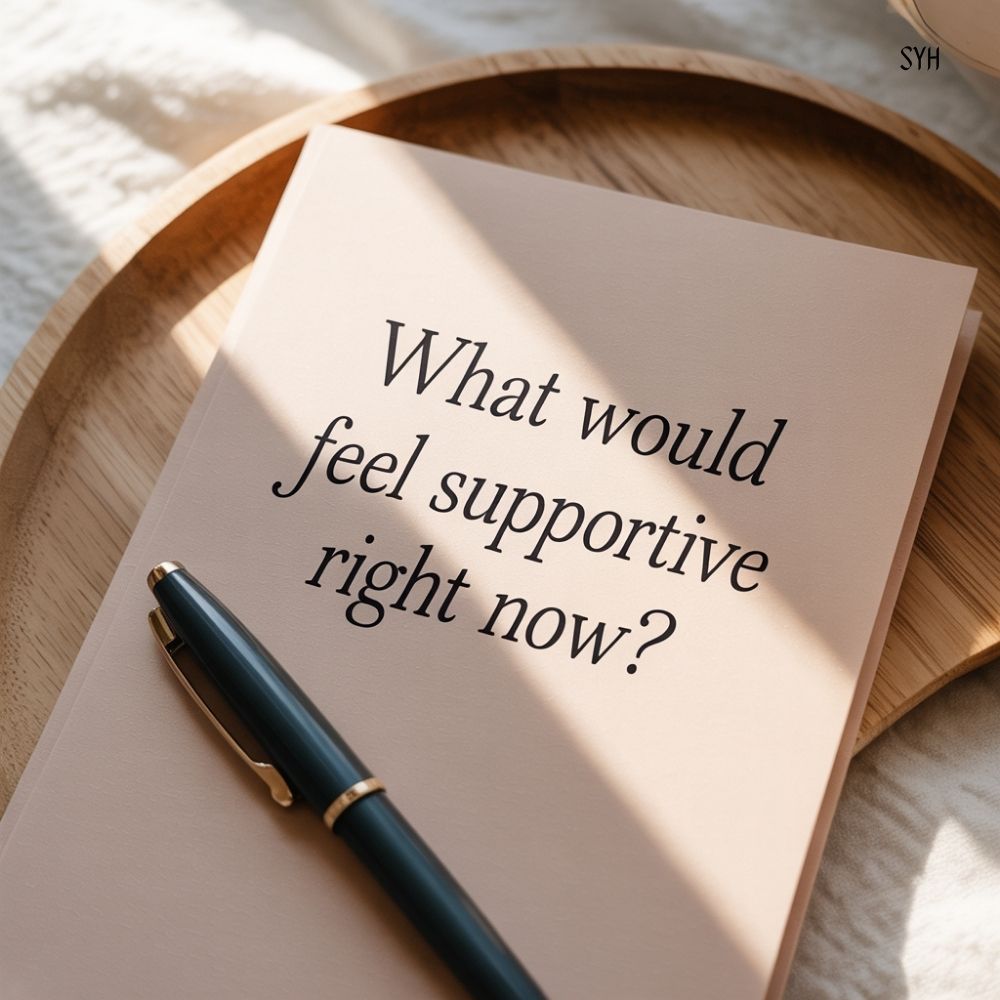
I ask, “What would feel supportive right now?”
Just what would feel supportive, in this exact moment, as I am.
This question does not assume that I need fixing. It does not frame rest as a reward or pause as failure. It simply invites honesty.
Why This Question Feels Different
What makes this question powerful is not its wording, but its tone. It does not demand an answer that makes sense to anyone else. It does not require me to justify my needs or explain them logically.
Sometimes the answer is to keep going, but in a softer way. Sometimes the answer is to stop entirely. Other times, it is something small and practical, like standing up, drinking water, or stepping outside for a moment.
The question shifts my relationship with resistance. Instead of seeing it as an obstacle, I see it as information.
Learning to Trust the Answer
At first, I did not always trust the answers that came up. They often felt too simple or too quiet to be valid. Rest for five minutes. Change tasks. Sit with the discomfort instead of avoiding it.
I worried that listening too closely would make me indulgent or unmotivated. What actually happened was the opposite. When I responded with support rather than force, I returned to what I was doing with more clarity and steadiness.
Trust grew slowly, through experience rather than intention. Each time I honored the answer, even in a small way, my body learned that I was listening.
Support Does Not Always Mean Stopping
One of the most important things I learned is that support does not always look like rest. Sometimes it looks like adjusting how I move forward rather than stopping entirely.
On days when I feel emotionally heavy, support might mean choosing a simpler task. On days when my body feels tense, it might mean slowing my pace instead of abandoning my plans.
This flexibility is what makes the question sustainable. It adapts to the moment instead of prescribing a fixed response.
How This Question Changed My Days
Asking this question regularly changed the rhythm of my days. I stopped treating discomfort as something to outrun and started meeting it with curiosity.
My energy became more consistent. I felt less depleted by the end of the day, even when I had done a lot. I noticed that I was less reactive and more responsive, both to myself and to others.
Small pauses became restorative instead of disruptive.
How It Changed My Relationship With Myself
Perhaps the biggest change was internal. By asking myself what would feel supportive, I stopped positioning myself as someone to manage or discipline. I became someone to care for.
This shift softened my inner dialogue. I stopped negotiating with myself constantly and started listening instead. That listening built trust, and that trust made everything else easier.
I no longer felt like I had to earn kindness from myself.
When I Still Push Through
There are still moments when pushing through is necessary. Deadlines exist. Responsibilities matter. The difference now is that pushing through is a conscious choice rather than a reflex.
When I do push through, I do so with awareness. I know why I am doing it, and I make space for support afterward. That awareness prevents resentment and fatigue from building quietly.
The question does not eliminate effort. It makes effort more humane.
Final Thoughts
The question I ask myself instead of pushing through has become a quiet anchor in my life. It reminds me that I am allowed to respond to myself with care, even in the middle of ordinary days.
By asking what would feel supportive, I choose presence over pressure and trust over force. That choice does not make life slower or smaller. It makes it more honest.
Sometimes, the most powerful thing we can do is pause long enough to listen, and gentle enough to respond.