
There are nights when my body is tired but my mind refuses to follow, nights when thoughts are not loud or anxious, just persistent, gently tapping at the edges of my awareness. I am not replaying anything dramatic, and I am not worrying about tomorrow in any specific way.
I simply feel full of the day, as if there is no more room inside me for processing, explaining, or understanding. On those nights, trying to calm my mind directly only makes it feel more awake.
What I crave in those moments is relief. I want my thoughts to loosen their grip without being pushed away. I want to feel myself return to my body in a way that feels kind and uncomplicated. Over time, I found that the most reliable way to do that was physical, gentle, and sensory.
Right before bed, when I don’t want to think anymore, I do one simple DIY act that helps my body take over where my mind is ready to rest. It is a small steam ritual, followed by a quiet moment of stillness, and it has become my most trusted way to end the day softly.
When Thinking Feels Like Too Much
I used to believe that bedtime routines had to involve reflection or intention setting, journaling, gratitude, or mental clearing. While those practices can be helpful, there are nights when they feel like more thinking, not less. On emotionally full days, asking myself to reflect only keeps me awake longer.
What I needed instead was a way to step out of my head without effort, something that worked gently and instinctively. I noticed that when my body felt warm, soothed, and cared for, my thoughts naturally softened. I did not need to tell them to stop. They simply slowed on their own.
That realization changed how I approach my evenings. I stopped trying to manage my mind and started supporting my body instead.
The DIY Steam I Rely On
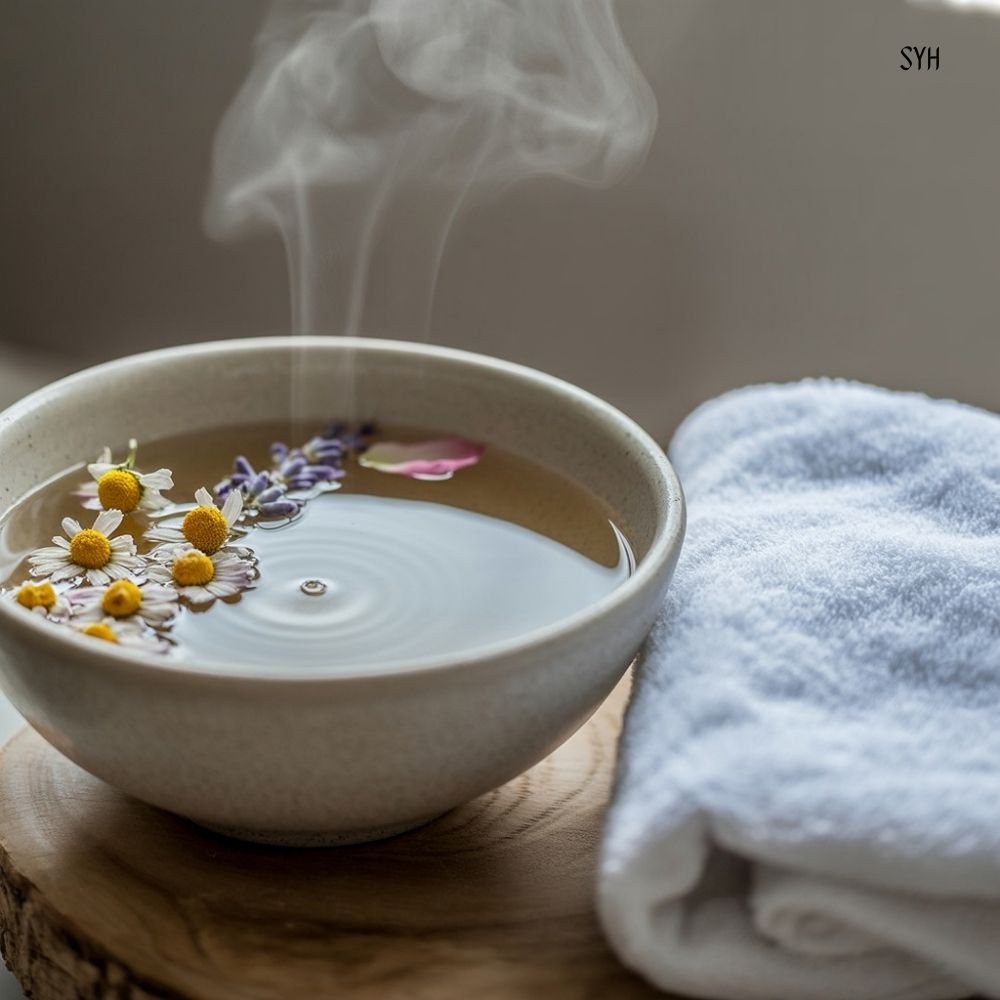
The DIY act I turn to on these nights is a simple facial and upper body steam. It is quiet, contained, and deeply calming, and it requires very little preparation. I like it because it creates a pocket of warmth and scent that I can step into without thinking.
The steam gives my thoughts somewhere to dissolve. The warmth softens my shoulders and jaw. The scent gives my attention something gentle to rest on. Together, they create a transition from day to night that feels natural rather than forced.
Why Steam Feels Especially Comforting at Night
Steam surrounds rather than stimulates. Unlike cold water or invigorating scents, it encourages release. When I lean over the bowl and feel the warmth rise, my breathing slows automatically. My body responds before my mind has time to interfere.
I associate steam with containment. The towel over my head, the bowl in front of me, the quiet moment of pause. Everything feels held. On nights when my thoughts feel scattered, that sense of containment is exactly what I need.
It is not dramatic or intense. It is subtle, which is why it works so well.
My Gentle DIY Steam Guide
This is the exact way I prepare my steam on nights when I don’t want to think anymore. I keep it intentionally uncomplicated so it never feels like a project.
What You’ll Need
- A heat safe bowl
- Hot water, not boiling, just comfortably steaming
- One soft towel
- Optional additions, choose only one or two
- Dried chamomile
- Dried lavender
- A few rose petals
- One drop of lavender or frankincense essential oil
How I Prepare It
I place the bowl on a stable surface, usually my desk or bedside table, somewhere I can sit comfortably. I pour in the hot water slowly, watching the steam rise without rushing. If I am using herbs or petals, I add them gently, letting them float rather than stirring aggressively.
If I choose to use an essential oil, I add just one drop. More than that feels overwhelming, especially at night. This ritual is about subtlety, not intensity.
Once everything is ready, I sit down, place the towel loosely over my head, and lean forward just enough to feel the warmth without strain.

The Steam Itself
I stay with the steam for about five to eight minutes. I do not time it exactly. I let my body decide when it has had enough.
During this time, I focus on breathing slowly through my nose. I am not counting breaths or controlling them. I simply notice the warmth, the scent, and the quiet rhythm of inhaling and exhaling.
If thoughts arise, I let them pass through without engaging. The sensation of the steam gives my attention somewhere else to land.
What I Do Immediately After
After the steam, I pat my face dry gently and apply a simple moisturizer or facial oil. I do this slowly, without checking my reflection. The goal is comfort, not appearance.
Then I sit quietly for a minute or two, hands resting in my lap, allowing the warmth to settle. This pause is important. It lets the ritual complete itself rather than ending abruptly.
Only after that do I get into bed. By then, my body feels heavy in the best way, and my thoughts are no longer asking for attention.
How This Helps My Mind Let Go
The most noticeable effect of this ritual is not immediate sleep, but mental quiet. The background noise of the day fades. Thoughts lose their urgency. Even if my mind is still active, it feels softer, less insistent.
I no longer feel the need to resolve anything before sleeping. The steam gives me permission to stop holding everything. That permission is what allows rest to come naturally.
Over time, my body has learned this sequence. The moment I prepare the steam, my nervous system begins to slow down.
Why This Feels So Elowen
This ritual reflects everything I value, gentleness without pressure, beauty without performance, and care without expectation. It is sensory, emotional, and deeply personal, yet simple enough to return to again and again.
It does not ask me to improve myself. It asks me to soften. It allows me to end the day as I am, without commentary.
That, to me, is real rest.
Final Thoughts
What I do right before bed when I don’t want to think anymore is not about stopping thoughts. It is about giving my body enough comfort that thinking no longer feels necessary. Through a simple DIY steam, warmth, scent, and stillness take over where my mind is ready to rest.
This ritual has taught me that sometimes the most effective way to quiet the mind is to stop addressing it directly. By caring for the body gently and consistently, rest becomes an invitation rather than a struggle.
On nights when I feel full of the day and empty of words, this is how I let myself soften, settle, and finally, sleep.